



For our parents, “going to the bank” was a Saturday morning ritual. It involved driving to a brick-and-mortar building, standing in a velvet-roped line, and speaking to a teller behind bulletproof glass just to move a few hundred dollars.
In 2026, that version of banking isn’t just outdated—it’s a financial liability.
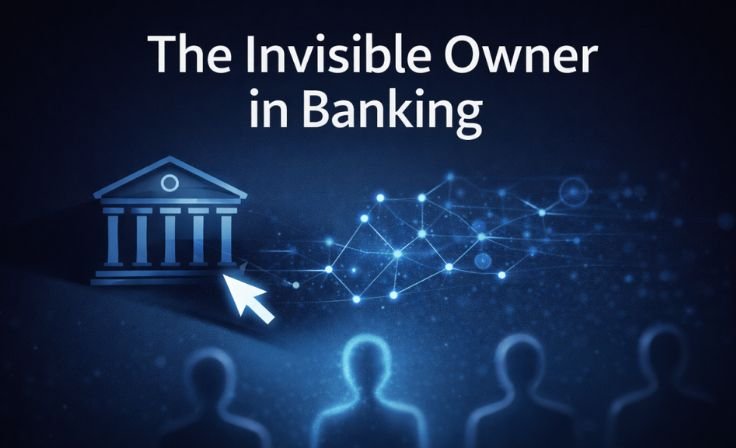
We have entered the era of Invisible Banking. Your bank is no longer a destination you visit; it is a software layer embedded into the fabric of your digital life. Whether you are buying a coffee via your smartwatch, splitting a bill on social media, or asking your car to pay for its own electricity at a charging station, the “bank” is happening in the background.
The Seismic Shift: From Destinations to Software Layers
The traditional banking model was built on “geographic convenience”—the bank with the most branches in your city won your business. In 2026, the bank with the best API (Application Programming Interface) wins.
Banking has become a utility, much like electricity or the internet. You don’t “go” to the internet; it is just there. Similarly, your financial services are now integrated into the platforms you already use:
- Embedded Finance: You can now get a small business loan directly through your e-commerce dashboard.
- Social Payments: Moving money is as simple as sending a DM.
- Voice-Activated Wealth: You can tell your AI assistant, “Save $20 from my paycheck if the stock market dips today,” and it happens instantly.
Why It Matters: The Profit is Moving to Your Pocket
The “Death of the Branch” isn’t just about convenience; it’s about math. Maintaining thousands of physical buildings, paying for heating, security, and specialized staff is incredibly expensive. Traditional banks pass those costs onto you through “Monthly Maintenance Fees,” “Atm Fees,” and lower interest rates on your savings.
The Invisible Advantage:
Digital-only banks (Neobanks) have almost zero physical overhead. Because they don’t have to pay for marble floors and vault maintenance, they can offer:
- Higher Interest Rates: In 2026, while big traditional banks might offer 0.01%, invisible banks are often offering 4% to 5% on simple savings accounts.
- No Hidden Fees: If a bank doesn’t have a building to maintain, they don’t need to “fine” you for not having enough money in your account.
- Real-Time Innovation: Invisible banks update their features every week, not every decade.
The “Leap”: Stop Paying for a Ghost Building
If you are a young person in 2026 and you are still paying a $12 monthly fee for a “Basic Checking Account” at a bank you never physically enter, you are effectively donating your wealth to a ghost.
The Lucky Frog Checklist for 2026 Banking:
- Audit Your Fees: If your bank charges you to “manage” your own money, it’s time to move.
- Look for Integration: Does your bank play nice with your investment apps, your budget trackers, and your digital wallet?
- Check the Yield: Is your money sitting idle, or is it working for you at the highest possible rate?
Final Thought: Frictionless Finance is the Goal
Dean’s vision for Lucky Frog is built on the idea of the “Leap.” To leap toward financial independence, you have to remove the “friction” that slows you down. Waiting three days for a check to clear or driving to a branch to sign a paper form is friction.
In 2026, your money should move at the speed of your thoughts. The physical branch didn’t just die; it evolved into something more powerful: Freedom. Stop visiting your bank. Start using it.